The First Week of Daycare: What Nobody Actually Warns You About

Category: For Parents | Audience: Parent experiences and wisdom
You did the homework. You toured the schools. You stress-googled at midnight, you compared tuition, you finally picked one, you filled out the mountain of paperwork, packed the lunchbox, labeled everything you owned, and even practiced saying goodbye in the car.
You were prepared.
Then drop-off morning happened.

If you're reading this from a parking lot, still in your sunglasses, white-knuckling the steering wheel and trying not to ugly cry where another parent might see you, you are not alone. Here are some things nobody really warns you about that first week.
The drop-off probably hurts you way more than it hurts them
If you ask any childcare worker (gently, ideally after coffee), they'll all tell you the same thing: most kids stop crying within a couple of minutes. Not because they didn't love you. Because they're three years old, there are blocks on the floor, the dramatic play corner has a fake stove, and Miss Dana is honestly the most fun person they've ever encountered in their short little lives.
You don't get to witness any of that, obviously. You leave while your kid is sobbing. Then you spend the next several hours spiraling, picturing worst-case scenarios. Then you walk into pickup and your child is covered in finger paint and furious at you, because you interrupted snack time and now they have to leave their new best friend Lily.

Your feelings about all of this are real, by the way. Just because your kid is going to be totally okay at daycare doesn't mean your sadness about leaving them is somehow not valid. Both of those things can absolutely be true at the same time.
They might seem totally fine at drop-off and completely fall apart at home
Some kids hold it together all day long. No tears, polite, sweet, participating in everything. And then they spot you in the lobby and the floodgates open.
There's a name for this. Child development folks call it the "haven effect," and it's both real and well-documented. Your kid spent the entire day doing a huge amount of emotional labor in an environment that is brand new to them. You are their safe person. The second they see you, every feeling they were holding in finally has somewhere to go.
This is not a sign that daycare is bad for them, even though it may look like it. It is actually a sign that they trust you completely. I know that doesn't really feel like a compliment in the moment, but I promise that is what it is.
Expect weird sleep and even weirder eating for at least a few days
Tiny kids are cognitively wrecked by new environments. The new faces, the new schedule, the new sounds, the constant social effort of figuring out a brand-new room full of other small humans, all of it adds up to almost nothing left in the tank by the end of the day.

You should expect some combination of:
- Earlier bedtimes and longer sleep stretches, which honestly, you should take advantage of this while you can
- Random evening meltdowns that seem to come out of absolutely nowhere
- Eating way more or way less than they normally do
- Velcro-level clinginess the second you walk in the door
None of this is regression. It is adjustment. Their little nervous system is doing an enormous amount of work behind the scenes, and the rest of the body is responding accordingly.
How you say goodbye matters more than how long you take
Almost every daycare teacher will tell you some version of the same thing, which is to keep goodbyes short and consistent. This isn't a productivity thing or a tough-love thing. It's that long, drawn-out goodbyes (the kind where you leave, then come back to check on them, then linger, then leave again) actually tend to make the whole thing harder. The uncertainty of when you're really, actually leaving is harder on your kid than the leaving itself.
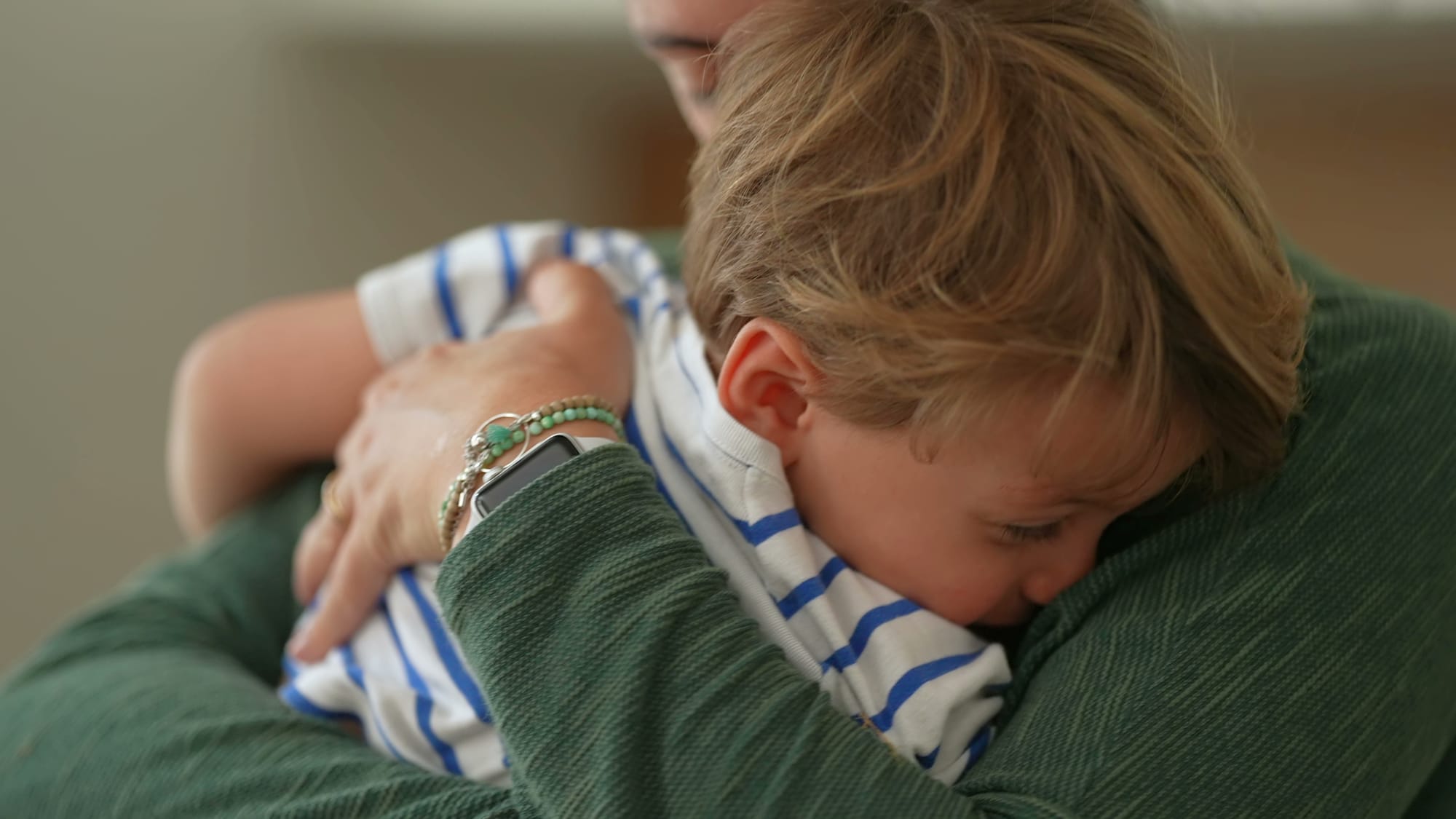
So put together a goodbye routine. Something small. A specific hug, a silly phrase you only use at drop-off, a secret handshake, whatever works for the two of you. Use it every single morning, in the same order. Then go. The teacher has done this approximately a thousand times and already knows exactly what to do once you walk out.
And if you need to sit in the parking lot for ten minutes after, listen, that's between you and your sunglasses.
Week two will feel different. Week three will feel weirdly normal.
The first week is genuinely the hardest week of the whole thing. By week two, everyone has a sense of the rhythm and what to expect. By week three, your kid will probably wake up on a Saturday and ask if today is a school day, and you will feel approximately seventeen different things about that all at once.
Both of you needed time to adjust to a major change. This was always going to take more than a couple of days, which is not a failure of preparation or a sign that you picked the wrong school. That is just how humans work, especially small ones whose entire world just got reorganized.
You actually did a really good thing here
High-quality childcare with consistent caregivers, a real schedule, and a lot of socialization is genuinely good for kids. The research backs this up pretty thoroughly. A hard first week does not mean you made the wrong choice for your family. It just means quality care comes with a real adjustment period, for them and for you.
You took the time to find a good fit, and that is not nothing. You did the work. That counts.

Still in the search phase, or know somebody who is? KidsQueue is The Two-Sided Enrollment Marketplace Connecting Families & Childcare Providers. Use Smart Match to find programs that actually fit your family, save your favorites with Watchlist, and book visits through Tour Request, all from one place. Get started with KidsQueue.